


Summit Softball Complex
Overview
The Summit Wetland project, located within Chattanooga’s Summit Softball Complex, consisted of a botanical survey and ecological assessment. Conducted by Tierra Environmental Consulting experts, the study
aimed to evaluate existing plant communities, identify invasive and native species, delineate wetland
boundaries, and provide data-driven recommendations for future maintenance, restoration, and public engagement efforts.
The Summit Wetland—an engineered stormwater feature surrounded by forest and urban
infrastructure—had experienced significant ecological shifts in recent years, largely due to
heavy-handed maintenance that removed most of its tree cover. This disturbance had led to
reduced ecological functionality, increased invasive species proliferation, and a growing need for
a more sustainable and informed management strategy.
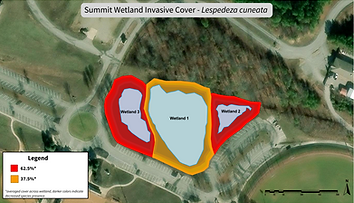
Our experts used current vegetation monitoring and wetland science standards. Native and Invasive species cover and diversity were recorded using a systematic plot-based approach. Wetland delineation was conducted using hydric soil indicators, hydrology observations, and dominant plant communities to delineate the wetland’s boundaries. Geospatial data were collected and analyzed using ArcGIS to map species distributions and wetland extents.


Key Findings
Biodiversity
-
123 Unique plant species.
-
54 plant species in forested sections.
-
69 plant species in the wetlands.
Invasive species impact
-
5.3% cover in the forested sections.
-
30.5% cover in the wetlands.
-
Key invaders include Lespedeza cuneata, Lolium
arundinaceum, and Cyperus rotundus.
Ecological Health
-
Forested areas demonstrated high native species resilience.
-
Wetlands showed signs of ecological stress due to high cover of invasive plant species.
Wetland Functionality
Educational Opportunities
-
Public education resource for green infrastructure, stormwater systems, and native ecosystems.
If you would like to see a full list of the 123 plant species and their cover, click here.